

Why Land Prices Are Increasing in Dholera Smart City
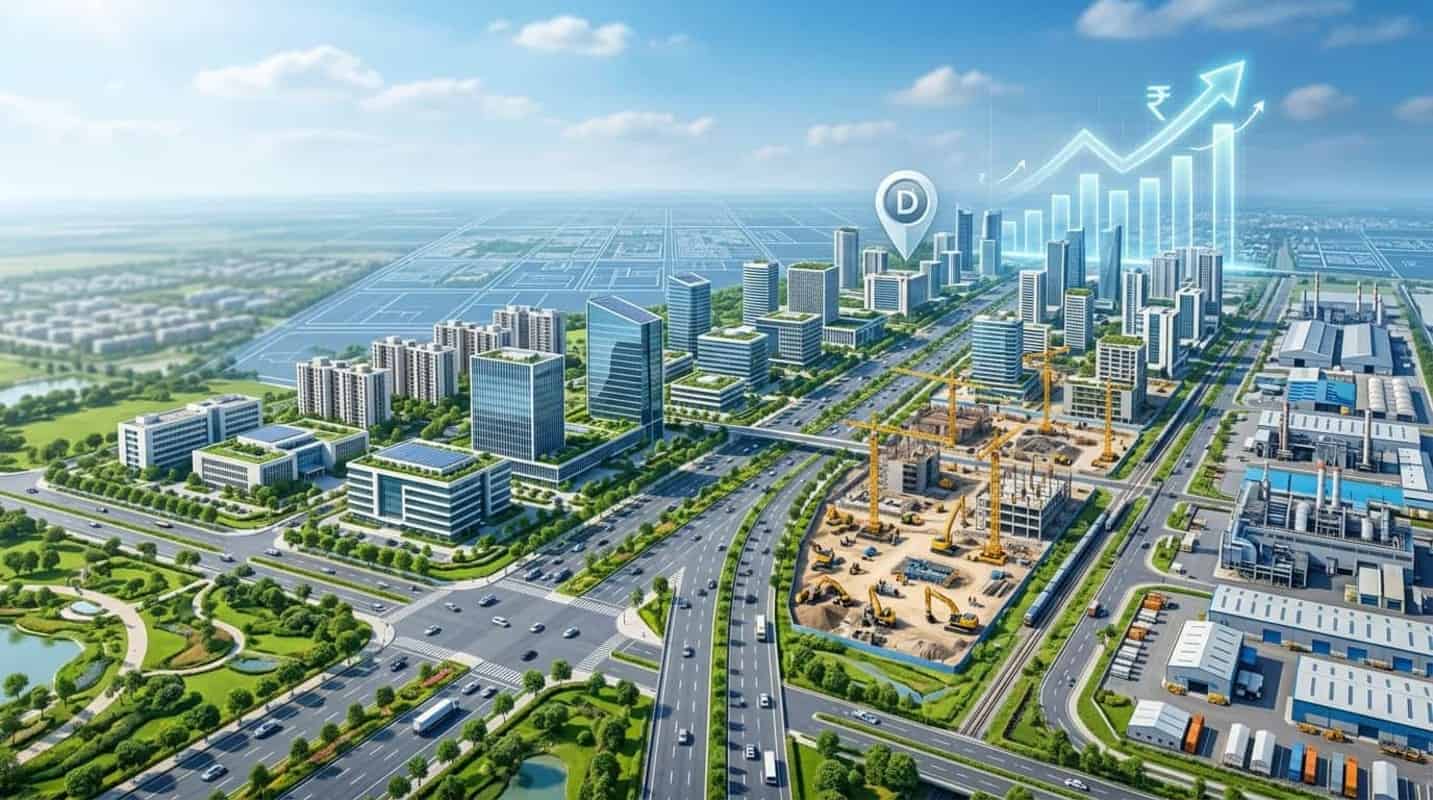
Key Factors Driving Dholera Property Growth in 2026
Ask anyone who has followed Gujarat's real estate market over the last few years, and they will tell you the same thing: Dholera Land Price has been on a steady, almost uninterrupted climb. What began as an ambitious government blueprint has gradually turned into one of the most closely watched land markets in western India. For investors, homebuyers, and business owners alike, understanding why this is happening is far more useful than simply reacting to the numbers.
Land in Dholera is not appreciating by accident. Behind every price movement lies a combination of planning decisions, infrastructure spending, industrial policy, and shifting investor sentiment. This article breaks down the real forces behind Dholera Land Price Growth, so that anyone considering an Investment in Dholera Land can approach the decision with clarity rather than assumption.
Why Dholera Smart City Is Attracting Investors
Dholera Smart City occupies a unique position in India's urban development story. Unlike most Indian cities that grew organically over decades without a master plan, Dholera was conceived from the outset as a planned greenfield city under the Delhi-Mumbai Industrial Corridor initiative. That distinction matters enormously to investors, because it means road widths, utility corridors, zoning boundaries, and land-use categories were decided in advance rather than retrofitted onto existing settlements.
This level of planning gives investors a rare sense of predictability. When someone chooses to buy land in Dholera, they are not guessing where future roads or commercial hubs might appear; those decisions are already documented in the Town Planning schemes. That predictability, combined with the scale of government backing behind the project, is a major reason Dholera continues to draw both first-time investors and seasoned real estate professionals from across India and overseas.
Government-Backed Infrastructure and Planned Development
Very few private real estate projects in India enjoy the level of government support that Dholera SIR receives. The Special Investment Region has been backed by coordinated funding and planning from both central and state authorities, which has translated into tangible progress on the ground rather than paperwork alone. Roads have been laid, water and sewage networks have been developed underground before construction even begins above them, and administrative buildings such as the ABCD Building have been completed to house the region's governing bodies.
This underground-first approach to utilities is worth noting because it is unusual even by Indian smart city standards. Typically, cities lay water and electricity lines after buildings already exist, leading to years of disruptive digging and retrofitting. In Dholera, the utility trenching was completed early, which means future development can proceed without the infrastructure bottlenecks that slow down growth in older cities. For anyone evaluating Land Investment in Dholera, this sequencing reduces the uncertainty that typically surrounds emerging real estate markets.
The Impact of Industrial Growth on Land Values
Land prices rarely rise in isolation; they respond to economic activity happening around them. Dholera has been positioned as a manufacturing and semiconductor hub, with several large-scale industrial projects announced or under construction in and around the region. When a semiconductor fabrication unit or an electronics manufacturing facility sets up operations, it does not arrive alone. It brings ancillary suppliers, logistics companies, employee housing demand, and service businesses that all need land of their own.
This ripple effect is one of the clearest explanations for rising Dholera Land Price in industrial and commercial zones. A factory that employs a few thousand workers creates demand for nearby housing, schools, retail outlets, and warehousing space. Each of these needs translates into land demand, and because Dholera's industrial zones are still filling up rather than fully built out, early investors in these areas often benefit from appreciation that tracks the pace of industrial commissioning rather than speculative hype alone.
How Transportation Projects Improve Property Demand
Connectivity is one of the most reliable predictors of long-term land value anywhere in the world, and Dholera is no exception. The Ahmedabad-Dholera Expressway has cut travel time between the two cities significantly, making it realistic for businesses and commuters to consider Dholera as an extension of the Ahmedabad economic corridor rather than a distant, standalone township. As road quality improves and travel time shrinks further, land that once felt remote starts to feel accessible, and accessible land almost always commands a premium.
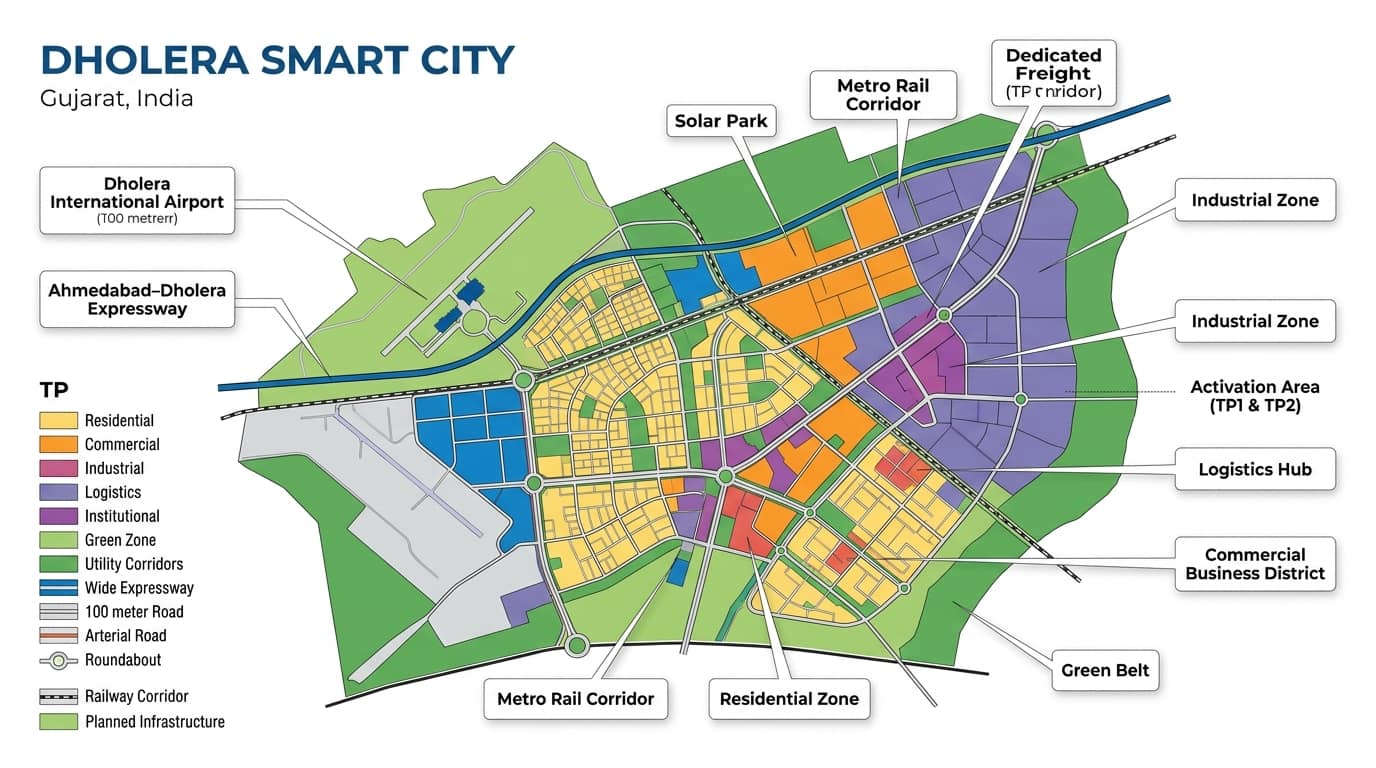
The upcoming Dholera International Airport adds another layer to this story. Airports do more than move passengers; they anchor logistics networks, attract export-oriented industries, and create demand for hotels, warehousing, and commercial office space in their vicinity. Investors tracking Land for Sale in Dholera near the airport corridor have generally paid closer attention to plots along approved access roads, since proximity to functioning transportation infrastructure tends to have a more immediate impact on price than proximity to infrastructure that is still years away from completion.
The Role of Town Planning (TP) Schemes in Land Appreciation
One of the least understood but most important factors behind Dholera Land Price Growth is the Town Planning, or TP, scheme process. Under this system, undeveloped land parcels are consolidated, replanned with roads and public amenities, and then redistributed back to original landowners as smaller, final plots with clear boundaries and legal recognition. A piece of land that exists only as a survey number before the TP process is finalized carries a different risk profile than a final plot that has been through this conversion.
As more zones move from draft TP status to final plot allocation, the land within them typically becomes easier to transact, easier to finance, and more attractive to end-users rather than pure speculators. This shift from provisional to final status is one of the quieter but more consistent drivers of price appreciation in Dholera SIR, because it reduces documentation risk and makes the land usable for actual construction rather than long-term speculative holding alone.
Residential, Commercial, and Industrial Demand Driving Price Growth
A city's land market rarely moves on a single type of demand, and Dholera illustrates this well. Residential plots are being sought by families planning to relocate for work, by NRIs looking for a long-term asset back home, and by investors who expect population growth to follow industrial expansion. Commercial land is drawing interest from retail chains, hotel operators, and service providers who want an early presence before rental rates climb alongside population density. Industrial land, meanwhile, continues to attract manufacturers looking for large contiguous plots with reliable utility access, something that is increasingly hard to find in older industrial belts closer to Ahmedabad.
Because these three categories of demand are rising together rather than in isolation, the overall Dholera Land Price trend has shown more resilience than markets driven by a single use case. A city that depends only on residential speculation can stall if buyer sentiment shifts, but a city with parallel industrial, commercial, and residential activity tends to have more layers of support underneath its land values.
Why Strategic Location Increases Investment Potential
Not all land within Dholera SIR appreciates at the same rate, and location differences matter just as much here as they do in any established city. Plots near the Activation Area, close to the expressway, or within reasonable distance of the airport corridor have generally seen faster appreciation than parcels in more remote TP zones that are still awaiting basic road connectivity. This is a natural outcome of how infrastructure spending is sequenced; areas that receive utilities and roads first tend to become usable, and therefore valuable, sooner than areas further down the development timeline.
For someone deciding where to buy land in Dholera, this means location analysis should go beyond simply checking the price per square yard. It is worth understanding which TP scheme a plot falls under, how far it sits from the nearest approved road, and how that zone fits into the broader master plan for the Special Investment Region. Land that looks inexpensive on paper may carry a longer runway before it becomes practically usable, while a slightly costlier plot in a more advanced zone may offer a shorter path to appreciation.
Factors Investors Should Evaluate Before Buying Land
Enthusiasm about Dholera Investment should always be balanced with basic due diligence, and this applies whether someone is buying a single residential plot or acquiring land in bulk for commercial development. Verifying whether a plot has received final TP allocation, confirming NA (Non-Agricultural) status and title clarity, and checking that the seller has legitimate documentation are foundational steps that should never be skipped, regardless of how attractive a price may seem.
It also helps to look at the pace of infrastructure work in the specific zone under consideration, rather than relying on general statements about Dholera as a whole. A TP zone with completed road work and utility trenching is in a fundamentally different stage of readiness than one where planning documents exist but construction has not yet started. Working with an established Land Consultant in Dholera who understands the zone-by-zone status of development can help investors avoid parcels that are legally sound but practically many years away from usability.
Common Misconceptions About Dholera Land Prices
One misconception that persists among newer investors is the belief that Dholera Land Price movements are purely speculative and disconnected from real activity on the ground. In reality, much of the price growth observed over the past decade has tracked specific, verifiable milestones such as expressway completion, utility trenching, and TP scheme finalization, rather than rumor or hype alone. This does not mean every plot in every zone is guaranteed to appreciate at the same pace, but it does mean the broader trend has been grounded in measurable development rather than unfounded promises.
Another common misunderstanding is assuming that because prices have already risen significantly since 2016, the opportunity has passed. Investors made similar assumptions in 2018 and again in 2020, and in both cases, land values continued to climb as infrastructure progressed further. This is not a guarantee of future performance, since real estate markets carry genuine risk and no outcome can be assured, but it is a useful reminder that a rising price trend does not automatically signal the end of a growth cycle, particularly in a region where large portions of planned infrastructure are still being built.
Long-Term Investment Outlook for Dholera Smart City
Looking ahead, the trajectory of Dholera Smart City will likely continue to depend on the same fundamentals that have driven it so far: the pace of infrastructure completion, the rate at which industrial units become operational, and the speed at which TP zones move from planning to final allocation. None of these factors move overnight, which is part of why Dholera has often been described as a long-term investment destination rather than a short-term trading opportunity.
For investors with a multi-year horizon, this steady, infrastructure-led pace can actually be an advantage. It allows time to evaluate specific TP zones, compare documentation carefully, and enter at a stage that matches individual risk tolerance, whether that means an early-stage zone with higher potential upside and longer wait times, or a more developed zone with steadier, more predictable appreciation. As Dholera SIR continues to mature, the underlying demand drivers, industrial expansion, improved connectivity, and planned urban design, are expected to remain intact, even as the pace of price growth in any given year may vary.
Conclusion
The rise in Dholera Land Price is not the result of a single event but the cumulative outcome of years of planned infrastructure spending, industrial commissioning, transportation upgrades, and structured Town Planning execution. Each of these elements reinforces the others: better roads attract industry, industry attracts housing demand, and finalized TP plots make land easier to transact and develop. Together, they explain why Dholera Land continues to draw attention from residential buyers, commercial developers, and industrial investors alike.
For anyone considering Land Investment in Dholera, the most informed decisions come from looking beyond headline price figures and examining the specific TP zone, documentation status, and infrastructure timeline behind a given plot. Working with an experienced local team, verifying paperwork carefully, and taking a long-term view of the region's development are practical steps that can help investors approach Dholera with realistic expectations rather than assumptions based on price movement alone.
Frequently Asked Questions
Why is Dholera Land Price increasing every year?
Dholera Land Price is increasing because of continuous government-backed infrastructure development, growing industrial investment, improving connectivity through expressway and airport projects, and rising demand from investors who want to buy land in Dholera before full-scale development is complete.
Is Dholera SIR a good option for long-term land investment?
Dholera SIR is considered a strong long-term investment option because it is India's first planned greenfield smart city with structured Town Planning schemes, clear land titles, and sustained infrastructure spending, all of which support gradual and stable land price growth over time.
What factors should investors check before they buy land in Dholera?
Before you buy land in Dholera, investors should verify the Town Planning zone and final plot number, confirm NA and title clearance, check proximity to approved roads and the Activation Area, and work with a knowledgeable local land consultant to avoid disputed or non-notified land parcels.
Will Dholera land prices continue to grow after the airport becomes operational?
While no investment can guarantee future returns, historical patterns around similar infrastructure-led cities suggest that land values near operational airports and expressways tend to see sustained demand, which is why many investors view Dholera Investment as a long-term rather than short-term opportunity.
Is it still profitable to invest in Dholera Smart City in 2026?
Many investors continue to find value in Dholera Smart City in 2026 because large parts of the planned infrastructure are still under construction, meaning land in several Town Planning zones remains comparatively affordable compared to fully developed industrial cities, though outcomes vary by location and should be evaluated individually.
Let’s Build Future Together.


 ×
×